
A searchable transcript can make testimony easier to cite and review. But when software alone turns a deposition recording into text, without the oversight of a neutral party, namely, the court reporter, justice will suffer.
That distinction is central to In re Patrick Hughey, No. 25-0463, now pending before the Supreme Court of Texas. The Court heard oral argument on October 6, 2026. As of October 29, it has not issued a decision.
The case raises important questions about software-assisted transcription and court-reporting requirements. It also highlights a principle litigators can apply now: use technology to work with the record, but protect the original record and the people accountable for preserving it.
What the Texas case puts at issue
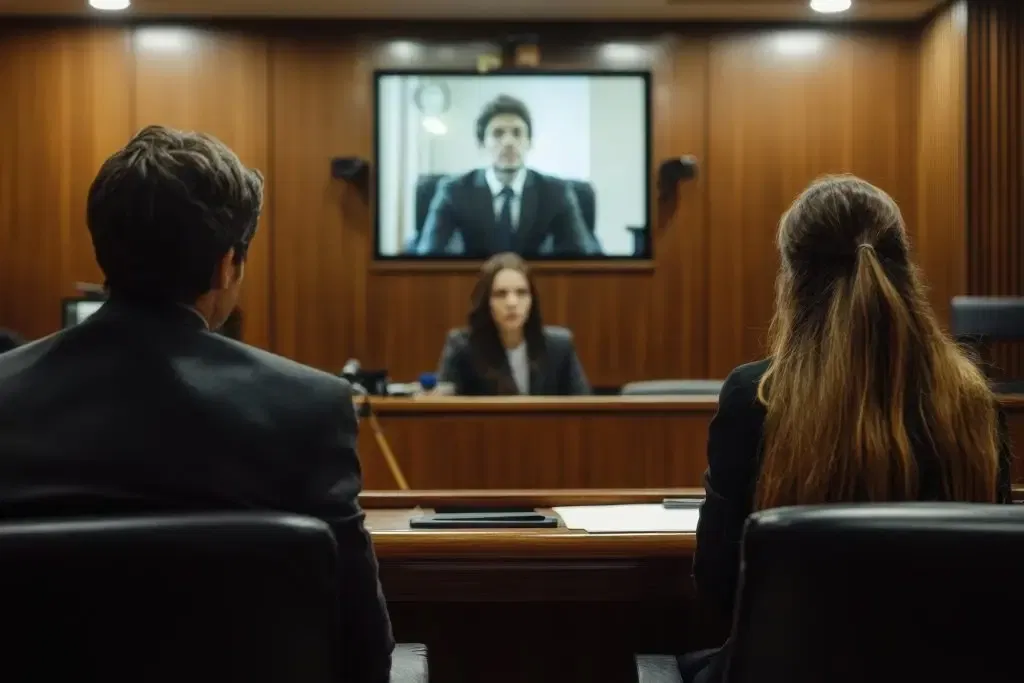
In Hughey, a party used voice-recognition software to produce a written transcript of a video deposition rather than relying on a certified shorthand reporter to prepare it. The trial court struck the transcript, and the Texas Ninth District Court of Appeals affirmed. The Texas Supreme Court then heard argument about the rules governing nonstenographic depositions, the role of certification, and how courts can address errors in a software-generated transcript.
The ABA Journal’s coverage reported that several justices focused on the availability of the video recording as a way to check the transcript. Justice Kyle Hawkins reportedly asked, “I don’t see what the issue is,” reasoning that a party could flag an error and compare the text against the video.
That is a practical safeguard, when the recording is complete, authentic, accessible, and preserved. It is not a reason to treat the derivative transcript as interchangeable with its source. Is this where we discuss chain of custody?
The case is still undecided. Oral-argument questions are not a ruling, and the legal requirements for deposition recording and transcription vary by jurisdiction.
A transcript is useful. The source transcript is essential.
A written transcript preserves the record. It helps counsel locate passages, prepare their case, or review a witness’s answer. Software may assist with those tasks, including by generating a draft or making content searchable.
But a transcript should be a representation of the verbatim testimony. It can contain errors or ambiguities, particularly when speakers talk over one another or speech is difficult to hear, but that is what errata sheets are for. Court reporters are human. That point has never been more paramount. Human. Capable of mistakes. The ability to stop four people talking at one time or tell the witness, "I can't hear your answer, you are speaking too softly."
Our practical position is straightforward: the court reporter transcript is the source record; a software-generated transcript is a tool derived from it. That is a preservation principle, not a claim about how the Texas Supreme Court will define the legal status of a transcript.

“Just check the video," but who has chain of custody?
The ability to compare text with video is valuable precisely because there is an original to check, protected by a neutral party. If the video is lost, incomplete, inaccessible, or changed, that safeguard weakens. A transcript error becomes impossible to resolve without the court reporter's original notes as the source.
This is where a certified court reporter’s role matters. Certification is not only about producing accurate words. It also provides professional accountability and supports the integrity and preservation of the record. AI can assist a reporter’s work, but it should not replace the certified professional responsible for the record.
The question, then, is not simply whether software can turn speech into text. It is who is accountable for the process, how the underlying recording is protected, and what happens when the transcript and recording do not match. Those are important questions for litigators to consider regardless of how the Court ultimately rules.
Practical steps for litigators while the case is pending
Until the Court issues a decision, legal teams should avoid treating Hughey as settled authority. Consider these steps when planning a deposition that may use non-certified court reporters, AI recordings or software-assisted transcription:
- Check the governing rules and agreements. Confirm the requirements in the applicable jurisdiction, court orders, and any agreement among counsel before selecting a recording or transcription method.
- Preserve the original recording. Keep the source file intact by hiring a certified court reporter. A derivative transcript is only useful as a checkable aid if the original can be consulted. Chain of custody should be with the court reporter.
- Verify text against the source. Again, hire a certified court reporter.
- Keep roles clear. The court reporter is there to preserve the record. The attorneys are there to litigate. AI should only ever assist both of those roles, not lead them. In other words, stay in your lane.
- Separate convenience from authority. A searchable text file may make review faster. That does not, by itself, determine whether it can be used as an official or evidentiary transcript.
Cost is part of the discussion in Hughey, but efficiency should not come at the expense of a reliable record. A cheaper workflow is not necessarily more efficient if uncertainty later requires additional review or creates disputes about what the witness said. The right process balances cost, access, accuracy, and accountability under the applicable rules. If you can't afford the cost of litigating it, maybe you should refer it out.
Apply the same preservation discipline to deposition exhibits
The integrity of the deposition record includes more than the transcript. Exhibits shown, marked, or discussed during testimony also need careful handling. This is why the court reporter is the custodian of those exhibits at the end of every deposition.
A practical, digital workflow can reduce the administrative work of printing, sorting, copying, and assembling deposition binders. It can also make it easier to find and present the right document during questioning. But convenience should not blur the line between an original exhibit and a marked or annotated version.
At the end of a deposition, marked exhibits must not be altered. Preserve the original document as it was used; keep any sticker or annotation in a clearly identifiable separate version. That gives the team a usable record of what was presented without overwriting the source.

For practical guidance on preparing and handling digital exhibits, see our guide to exhibit stickers and labels. And for a broader approach to using exhibits to focus testimony and keep a deposition moving, read How to Gain the Edge in Depositions With Digital Exhibits.
Use AI as assistance, not as the keeper of the record
The Texas Supreme Court’s questions point to a real distinction: technology can help create and search a transcript, while the legal and professional responsibilities surrounding the record remain. A tool can assist. It cannot take responsibility.
For litigators, that means maintaining a clear line between original exhibits and later annotations. Certified court reporters remain essential keepers of the record. Their accountability should remain central as tools evolve.

A well-managed digital exhibit workflow supports that care without adding unnecessary paper handling. ExhibitSuite helps litigation teams organize, search, present, annotate, and share exhibits while preserving original documents. Request a demo to see how it can fit into your deposition process.
This commentary reflects the status of In re Patrick Hughey as of October 29, 2026. The Texas Supreme Court has not ruled. It is not legal advice; consult the rules and requirements that apply to your jurisdiction and proceeding.
Frequently asked questions about AI transcripts and the court reporter's role
Can AI-generated transcripts replace court reporters?
No. A certified court reporter remains the accountable keeper of the record, and a software-generated transcript is only a tool derived from the recording. AI can assist a reporter's work, but it cannot take responsibility for preserving the official record.
What is the Texas AI court reporter case?
In re Patrick Hughey, No. 25-0463, pending before the Supreme Court of Texas, asks whether a voice-recognition transcript of a video deposition can stand in for a transcript produced by a certified shorthand reporter. The trial court struck the software-generated transcript, the Ninth Court of Appeals affirmed, and the Texas Supreme Court heard oral argument on October 6, 2026.
What is a nonstenographic deposition?
A nonstenographic deposition is a deposition either taken by a court reporter that doesn't use a stenograph machine. That can be a video or audio, a voice-to-text or digital court reporter or a mask (voice) reporter. Using any means other than a steno machine is considered a nonstenographic transcript.
Who is the keeper of the record in a deposition?
The certified court reporter. Certification carries professional accountability for the accuracy of the transcript, preservation of the record and chain of custody, including the exhibits marked during the deposition.
What should litigators do while the case is pending?
Treat Hughey as unsettled, not as authority. Confirm the rules and orders that govern your proceeding, preserve the original recording, verify any software transcript against the source, and keep the court reporter's role in preserving the record central.